

Lifestyle Medicine in Menopausal Health
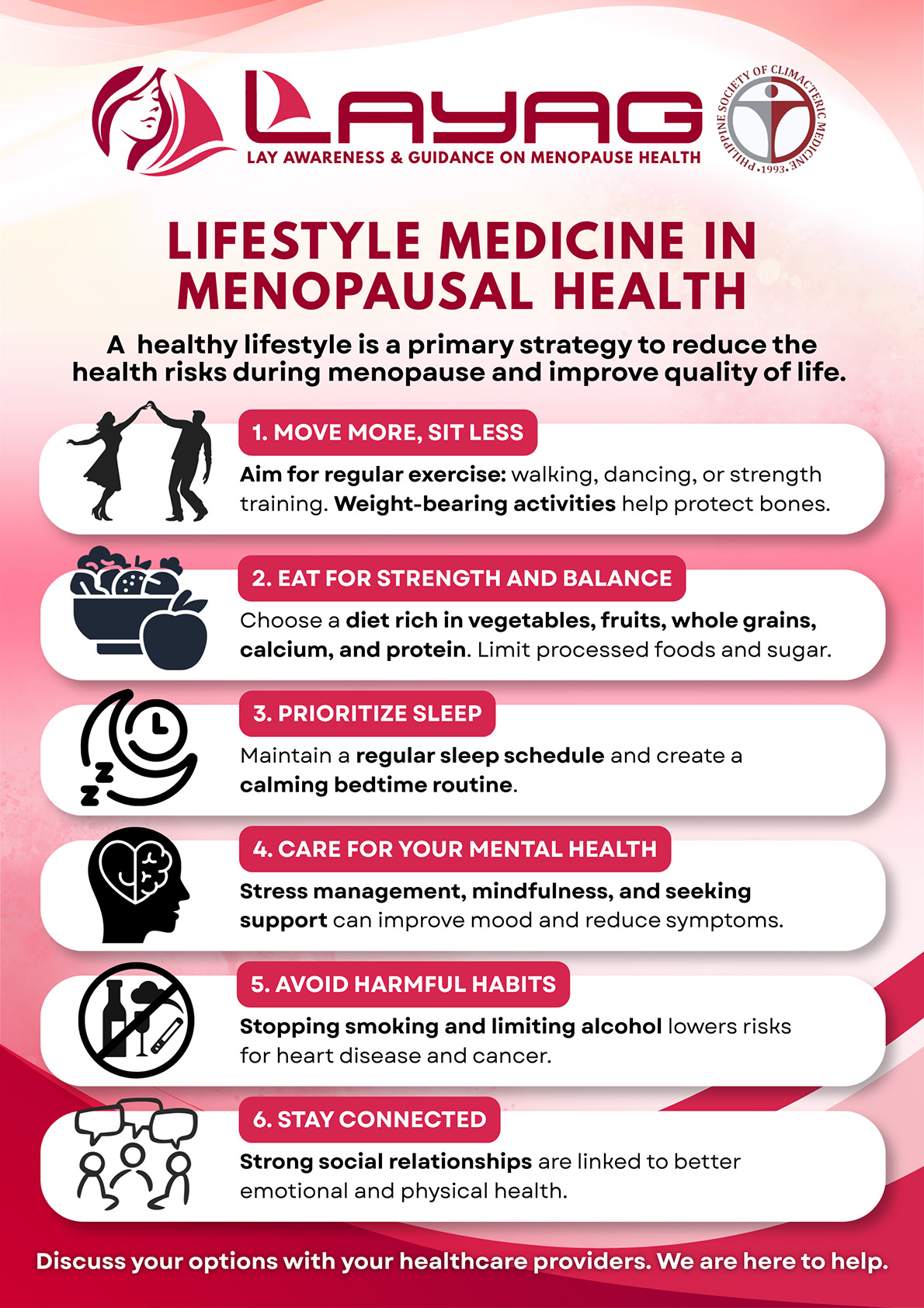
Menopause often brings hot flashes, sleep disturbances, mood shifts, and greater risks to heart and bone health. Fortunately, many symptoms can be managed with lifestyle medicine: simple, evidence-based habits that promote health. The International Menopause Society (IMS) recommends lifestyle measures as the foundation of midlife care, to be used with medical treatments when necessary.
What is Lifestyle Medicine?
Lifestyle medicine emphasizes daily behaviors that impact long-term health and is intended to complement—not substitute for—medical care. Its six essential pillars are:
- Healthy eating
- Regular physical activity
- Mental well-being
- Avoidance of harmful substances (e.g., smoking, excessive alcohol)
- Restorative sleep
- Social connection
These pillars are also aligned with holistic approaches promoted in Philippine clinical practice and is supported by the Philippine Society of Climacteric Medicine.
Why It Matters in Menopause
During menopause, hormonal changes can increase the risk of:
- Heart disease
- Osteoporosis (bone loss)
- Weight gain and metabolic changes
- Mood and sleep disturbances
A healthy lifestyle is a primary strategy to reduce these risks and improve quality of life.
Practical Tips for Everyday Life
You don’t need drastic changes. Small, consistent steps make a difference:
- Move more, sit less. Aim for regular exercise: walking, dancing, or strength training. Weight-bearing activities help protect bones.
- Eat for strength and balance. Choose a diet rich in vegetables, fruits, whole grains, calcium, and protein. Limit processed foods and sugar.
- Prioritize sleep. Maintain a regular sleep schedule and create a calming bedtime routine.
- Care for your mental health. Stress management, mindfulness, and seeking support can improve mood and reduce symptoms.
- Avoid harmful habits. Stopping smoking and limiting alcohol lowers risks for heart disease and cancer.
- Stay connected. Strong social relationships are linked to better emotional and physical health.
A Holistic Approach
Lifestyle medicine is not about perfection; it’s about progress and sustainability. Evidence shows that these habits can:
- Ease menopausal symptoms
- Improve mood and energy
- Protect heart and bone health
- Reduce long-term disease risk
Lifestyle changes may not be sufficient for all women, so doctors might suggest treatments like menopausal hormone therapy. Personalized care combines medical advice with healthy habits.
Menopause is a transition, and the right choices help women remain active and healthy. Consistent, small actions bring lasting benefits.
Based on recommendations from the International Menopause Society and aligned with local PSCM guidance on holistic menopausal care.